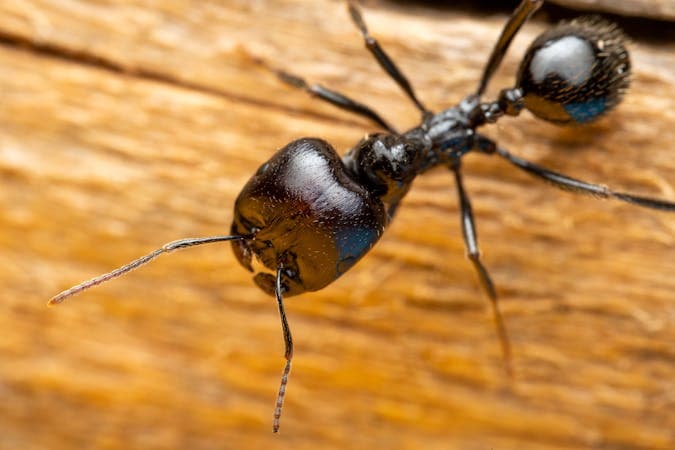
Why Ants Surge in NYC Spring and Summer
Every spring, as temperatures in New York City climb above 60 degrees Fahrenheit, ant activity in apartments and commercial buildings surges dramatically. Calls to pest control companies about ant infestations spike in April and May and remain elevated through September. Understanding why this happens — and why it happens so reliably — helps you get ahead of the problem rather than reacting to it after ants have already established themselves in your kitchen.
Ant colonies spend the winter in a state of reduced activity, clustered deep in soil, wall voids, or structural wood to conserve energy. When spring warmth signals a return to active conditions, colonies send out worker scouts to locate food and water sources for the season ahead. These scouts are the ants you start seeing in your kitchen in April and May — they are foragers evaluating your home as a food source and reporting back to the colony via pheromone trails.
In NYC apartments, the challenge is compounded by building density. Ant colonies nesting in shared soil beneath multi-unit buildings, in courtyard landscaping, or in the structural elements of pre-war construction can send scouts into dozens of units simultaneously. Treating a single apartment without addressing the colony source often produces only temporary relief.
Odorous House Ants vs. Carpenter Ants: Know the Difference
Not all ants in NYC apartments are the same, and correctly identifying the species is essential to choosing the right treatment approach.
Odorous house ants are small — about 1/8 inch — and dark brown or black. They get their name from the rotten coconut or blue cheese odor they release when crushed. Odorous house ants are the most common ant species encountered in NYC kitchens. They are attracted to sugary foods and moisture, and their colonies are typically located in wall voids, under floors, in soil near building foundations, and inside insulation. Colonies can have multiple queens and multiple satellite nests, which is why single-point treatments often fail to resolve the infestation.
Carpenter ants are significantly larger — 1/4 to 1/2 inch — and are typically black or black and red. Unlike odorous house ants, carpenter ants do not eat wood. They excavate galleries inside soft or moisture-damaged wood to build their nests. In NYC apartments, this means they are often associated with areas of water damage — window frames, sill plates, bathroom framing, and roof areas adjacent to leaks. Finding large black ants in your apartment in spring or early summer, especially near windows or moisture-prone areas, is a signal that structural wood damage may be present and should be investigated.
Winged ants — sometimes mistaken for termites — are reproductive males and females. Finding winged ants inside your apartment in spring is a sign that a mature colony is present in or adjacent to the structure.
Why Spray-and-Pray Fails Every Time
The most common reaction to seeing ants in your kitchen is to reach for a can of raid or a similar over-the-counter spray product. This approach is almost universally ineffective for producing lasting results and can actively make the problem worse.
Ant colonies are not eliminated by killing individual forager workers. The foragers you see on your countertop represent a small fraction of the total colony population, which remains protected in the nest. When you spray workers, you kill some surface ants, but the colony quickly replaces them. Worse, many synthetic ant sprays contain pyrethroids that act as repellents. When an ant colony senses a chemical threat at one entry point, it simply reroutes foragers through different pathways — often going deeper into wall voids or emerging in different areas of the apartment.
Repeated spray applications can also cause behavioral splitting in odorous house ant colonies. A colony with multiple queens may split into multiple satellite colonies when stressed, spreading the problem to new areas of the building. This phenomenon — called budding — is a well-documented response to chemical pressure in odorous house ant populations and is one reason why spray treatments in multi-unit buildings often seem to spread ant problems rather than resolve them.
The Gel Bait and Exclusion Approach
Effective organic ant control relies on two complementary strategies: targeted gel bait treatment to eliminate the colony at its source, and physical exclusion to prevent reentry.
Gel bait works because it exploits the foraging behavior that makes ants difficult to kill with sprays. Worker ants carry bait back to the colony and share it with nestmates, queens, and larvae through a process called trophallaxis — direct food transfer between colony members. A slow-acting bait that does not kill foragers immediately allows the active ingredient to spread through the entire colony before foragers stop returning. This is why proper gel bait treatment can produce results that persist long after the initial application.
Organic gel baits use naturally derived active ingredients combined with food attractants tailored to the target species. Sugar-based attractants work best for odorous house ants in spring and early summer. Protein-based attractants are more effective for carpenter ants and for odorous house ant colonies later in summer when colony protein needs are higher. Matching the bait matrix to the target species and the season is a skill that makes a significant difference in treatment outcome.
Exclusion complements bait treatment by reducing the entry points through which new foragers from outdoor colonies can access the interior. Common exclusion measures in NYC apartments include caulking gaps around baseboards, sealing pipe penetrations under sinks, and addressing gaps around window frames and door thresholds.
Specific Tips for NYC Apartment Conditions
Ground-floor apartments and basement units face the highest ant pressure because they are closest to soil-level colony nesting sites. For these units, exterior perimeter treatment and foundation gap exclusion are particularly important alongside interior bait placement.
Upper-floor apartments are not immune. Ant colonies in wall voids can extend vertically through multi-story buildings via pipe chases and utility conduits. If you are seeing ants in a high-floor apartment, the colony source is likely inside the building structure rather than entering from the exterior.
Kitchens and bathrooms are the most common focus points. Under sinks is a prime bait placement location due to the combination of moisture, pipe penetrations, and proximity to food-preparation areas. Inside cabinet hinge areas, under the refrigerator motor housing, and along the kickplate at the base of cabinets are all productive placement locations for ant gel bait.
Avoid cleaning ant trails with strong disinfectants before treatment. Pheromone trails guide foragers to bait placements. Cleaning trails immediately before bait application reduces treatment efficacy. Apply bait first, then maintain normal sanitation practices.
Frequently Asked Questions
Q: Are ants in my apartment dangerous?
A: Most ant species found in NYC apartments — odorous house ants, pavement ants — do not bite or pose a direct health risk. Carpenter ants can cause structural damage over time if nesting in wood. Ants that forage across food preparation surfaces can potentially spread bacteria, though this risk is generally low for common household species.
Q: How long does organic ant treatment take to work?
A: Gel bait typically produces visible reduction in ant activity within 3 to 7 days. Full colony elimination for odorous house ants usually takes 2 to 4 weeks. Carpenter ant treatments, which require addressing the nest and any moisture damage, may take longer depending on the scope of the infestation.
Q: Can I prevent ants from coming back after treatment?
A: Yes, with a combination of exclusion measures and sanitation practices. Sealing gaps around plumbing and baseboards, storing food in airtight containers, and fixing leaky pipes are the most impactful long-term prevention steps. Annual perimeter treatment in spring can also reduce the risk of recurrence in high-pressure locations.
Q: I am on the 10th floor — why do I have ants?
A: Ant colonies establish satellite nests inside building wall voids and pipe chases, allowing them to access high floors through internal pathways. Entry from outside at the 10th floor is unlikely; the colony source is almost certainly within the building structure.
Get Ahead of Ant Season This Year
Spring ant invasions in NYC are predictable, which means you can take action before the problem starts. Whether you are dealing with odorous house ants in the kitchen or carpenter ants near a moisture-damaged window frame, Organic Pest Control NYC uses targeted, plant-derived treatments that eliminate the colony without filling your home with synthetic chemicals. We serve all five NYC boroughs, Westchester County, Nassau County, and Suffolk County. Call us at (212) 580-9301 to schedule a spring ant inspection and get ahead of the season.