Tick Prevention in Nassau County: Long Island's Growing Tick Problem
Nassau County's tick problem has grown significantly over the past decade, and spring is when that risk becomes most acute. As one of New York's most densely populated suburban counties, Nassau blends residential neighborhoods with wooded parks, preserves, and heavily vegetated lawns — creating ideal conditions for ticks to thrive and encounter people. If you live in Nassau County, understanding the local tick landscape this spring could protect your family from a serious health risk.
Nassau County's Expanding Tick Population
Lyme disease case rates on Long Island have been among the highest in New York State for years, and Nassau County contributes significantly to that burden. The expansion of the white-tailed deer population across Nassau — deer are the primary reproductive host for adult blacklegged ticks — has allowed tick populations to spread from wooded preserves into suburban lawns, parks, and residential green spaces.
The blacklegged tick (*Ixodes scapularis*) is now well-established throughout Nassau County, including in communities that saw little tick activity as recently as 15 years ago. Warmer winters have extended the tick active season on both ends, with activity beginning earlier in spring and lasting later into fall.
Where Is Tick Risk Highest in Nassau County?
Tick activity in Nassau County concentrates in predictable environments:
Tick Species Present in Nassau County
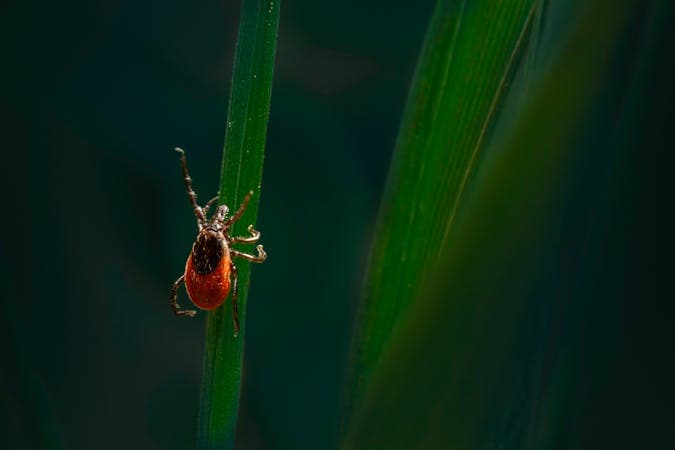
Blacklegged Tick (Deer Tick) — *Ixodes scapularis*
The primary disease-vector species. Adults are sesame-seed sized; nymphs are poppy-seed sized. Transmits Lyme disease, anaplasmosis (*Anaplasma phagocytophilum*), and babesiosis (*Babesia microti*). Most dangerous as nymphs in spring — tiny size makes them easy to miss.
Lone Star Tick — *Amblyomma americanum*
Identifiable by a distinctive white spot on the female's back. Larger and more aggressive than the deer tick — nymphs and larvae actively quest for hosts and can be encountered in significant numbers. Transmits ehrlichiosis and STARI, and is associated with alpha-gal syndrome (red meat allergy). Increasingly common in Nassau County's south shore and wooded areas.
American Dog Tick — *Dermacentor variabilis*
Larger, brown tick with silver markings. Primarily active spring through summer. Transmits Rocky Mountain spotted fever and tularemia. Commonly found in grassy and shrubby areas.
Diseases Carried by Nassau County Ticks
Tick-borne illnesses reported in Nassau County include:
Professional Yard Tick Treatment for Nassau County Properties
For Nassau County homeowners, professional perimeter tick treatment is the most effective way to reduce tick populations on your property.
Organic Pest Control NYC applies eco-friendly, family-considerate tick control treatments targeting the lawn-vegetation interface, garden beds, and wooded edges of your property — where ticks concentrate and where people and pets are most likely to encounter them. Our treatment approach minimizes exposure to beneficial insects and non-target wildlife while effectively reducing tick populations in treated areas.
**Timing matters:** The first treatment of the season should be applied in early-to-mid April, before nymphal deer ticks peak. Follow-up treatments in late June and September provide protection across all three active seasons.
Additional Tick Prevention Measures
FAQ: Ticks in Nassau County
**Q: When is tick season in Nassau County?**
A: Tick activity begins in March and peaks April through June. A second active period occurs in September through November. The lone star tick is active spring through fall.
**Q: Can ticks be in my front lawn, not just wooded areas?**
A: Yes. While wooded edges carry the highest concentration, ticks can be present in any lawn area — especially where deer travel or where there's leaf litter and shade.
**Q: How do I safely remove a tick?**
A: Use fine-tipped tweezers, grasp the tick as close to the skin as possible, and pull upward with steady pressure. Clean the bite area with alcohol or soap and water. Do not twist, crush, or apply heat to the tick.
**Q: Is my pet at risk from Nassau County ticks?**
A: Absolutely. Dogs and cats are frequently exposed to ticks outdoors. Consult your veterinarian about tick prevention products. Also check your pets after outdoor time — they can carry ticks inside that then transfer to people.
---
Don't let Nassau County's growing tick population put your family at risk this spring. Organic Pest Control NYC provides professional, eco-friendly tick yard treatments across Nassau County and Long Island. Call us at **(212) 580-9301** or Book Now to schedule your spring perimeter treatment before tick season peaks.