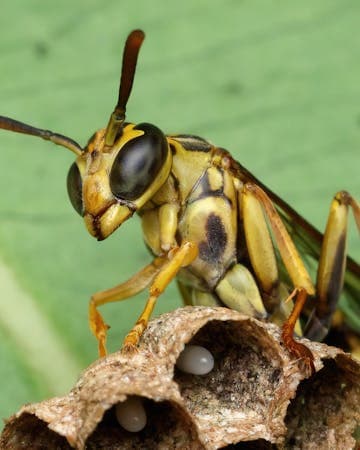
Spring Stinging Insects in NYC: Bees, Wasps & Yellow Jackets Are Back
By March and April, stinging insects are waking up across New York City. Queens that survived the winter in building eaves, wall voids, and window frames are emerging, searching for nesting sites, and beginning to build new colonies. For NYC residents, this spring emergence brings both a familiar annoyance and, for some, a genuine health risk. Here's what you need to know about bees, wasps, and yellow jackets this spring — and why spring is actually the ideal time to deal with them.
When Do Stinging Insects Become Active in NYC?
Stinging insect activity in New York City follows a predictable spring timeline:
The critical window for intervention is **March through early May**, when nests are small and queens are just beginning colony construction. A nest found in April might have 10–50 workers. The same nest in August may contain 1,000–5,000.
Bees vs. Wasps vs. Yellow Jackets: Key Differences
Understanding which stinging insect you're dealing with determines the right response:
Honey Bees — *Apis mellifera*
Paper Wasps — *Polistes* spp.
Yellow Jackets — *Vespula* and *Dolichovespula* spp.
Bald-Faced Hornets — *Dolichovespula maculata*
Where Stinging Insects Nest in NYC Buildings
NYC's urban architecture provides abundant nesting sites:
Why Spring Is the Best Time to Address Stinging Insect Nests
There is a narrow, optimal window for dealing with stinging insect nests: **early spring**. Here's why:
1. **Small colony size:** A spring nest has few workers and is not yet defensive
2. **Lower aggression:** Queen bees and wasps are focused on nest establishment, not colony defense
3. **Easy access:** Nests built in spring are visible before foliage fully conceals them in eaves and trees
4. **Prevention:** Removing a small spring nest prevents a large, dangerous summer nest
Our Eco-Friendly Approach: Relocate Bees, Remove Wasps
Organic Pest Control NYC approaches stinging insects with a clear ecological priority: **honey bees and native bee species are relocated whenever possible** rather than exterminated. We work with registered beekeepers to safely remove and relocate swarms and established honey bee colonies.
For wasps, yellow jackets, and hornets that pose a direct safety risk to building occupants, we provide targeted, low-impact nest removal using precisely applied treatments at the nest site — minimizing product use and avoiding broad-spectrum spraying.
FAQ: Stinging Insects in NYC
**Q: I found a small nest under my eave — is it dangerous?**
A: A small spring nest with fewer than 20 workers poses minimal risk if not disturbed. However, it will grow significantly by summer. Spring is the ideal time to address it.
**Q: I have a honey bee swarm on my building — what should I do?**
A: Don't disturb it. Swarms are temporary (usually 24–48 hours) and relatively docile. If they begin building a permanent hive, call us — we prioritize working with beekeepers for relocation.
**Q: Are yellow jackets worse in late summer?**
A: Yes. By late summer, yellow jacket colonies are at peak population and food competition is high, making them significantly more aggressive than in spring and early summer.
**Q: Can stinging insects get inside my apartment?**
A: Yes — if a colony has established in a wall void, workers can find their way into living spaces through electrical outlets, light fixtures, and wall penetrations.
---
Spotting nests forming on your NYC property this spring? Act early — small spring nests are far easier and safer to address than summer colonies. Organic Pest Control NYC handles stinging insect removal throughout all five boroughs, Westchester, Nassau, and Suffolk counties. Call us at **(212) 580-9301** or Book Now before the season gets away from you.