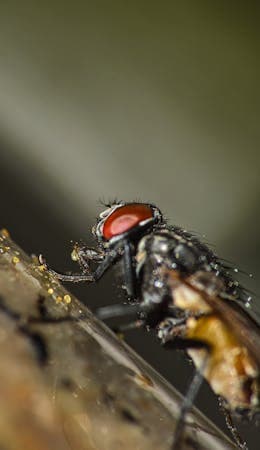
Flies in Homes: Types and How to Prevent Them
Flies may be small in stature but are dangerous creatures. So, you should take flies in homes, and any fly infestation just as seriously.
They can be beneficial organisms in nature, but flies in homes can cause major problems once they enter. All types of flies work to decompose decaying organisms and vegetation. This is an important process for the natural world outside. They also serve as food for animals like birds and reptiles.
However, because flies feed upon diseased, dying, and dead matter, they can also harm people and animals by spreading diseases they pick up. Common diseases spread by flies include:
If that's not enough to get your attention then remember this statistic: a single fly can carry millions of bacteria on its body and several dozen million in its stomach.
What Kind of Flies Will Invade My Home?
Any kind of fly can make its way into your home at some point. However, there are some that are significantly more common in human settings than out in the wild. Household-infesting flies both breed, and complete their entire life cycles indoors.
On the other side, some types of flies breed and develop outdoors, and then purposefully or accidentally make their way inside during specific times of the year.
So, it's important to identify the exact species of fly that is invading your home in order to develop a proper solution.
Types of Flies in Homes
#### House Flies
These are arguably the most common type of fly you will find around the home. They tend to lay their eggs in rotting plant debris as well as decaying organic matter. They may also occupy piles of animal manure around your home.
#### Blow Flies
These flies lay their eggs inside dead animals, which later causes the carcasses to bloat. They may also lay eggs in decaying scraps of meat or garbage. These unappetizing flies are shiny and metallic in appearance.
#### Fruit Flies
Fruit flies are tiny with bright red eyes. While they are more common in the fall they may appear in your home at any time of the year. They reproduce on overripe and decomposing fruit or other produce. They can even multiply inside drains as well.
#### Cluster Flies
Cluster flies don't usually breed indoors, but make their way inside as the weather changes. They are dark gray in color and fly extremely slow. When you kill them, they release a sweet-smelling scent. These flies overwinter in the top floors or attics of homes and will invade indoor spaces on warm days.
#### Stable Flies
Don't let the name of this fly fool you – they aren't exclusive to barns or stables. These pests feed on the blood of warm-blooded animals (yes, this includes humans!) and cause painful welts. They can even bite through your clothes! These flies lay their eggs in decaying vegetation and compost piles.
Methods of Prevention
Any kind of fly infestation can be a major annoyance in your home. Luckily, there are several steps you can take to reduce the likelihood of an infestation before it even becomes a problem.
Eliminating a Fly Infestation
Residual sprays are one of the most common ways to eliminate a fly infestation. These sprays are used where flies congregate such as windows or surfaces of walls. But they can contain chemicals that might be harmful to your family or pets.
You can also suck up individual flies with a small handheld vacuum cleaner. This can be effective in that it not only removes the flies themselves but also prevents them from laying any more eggs or attracting other pests.
Many species of flies are slow moving, so picking them up with a vacuum is easy to do. It's important to do this before the fall or winter months approach as these are the times when overwintering flies will set up shop in your home.
Flies also tend to be drawn to sweet foods. Make sure your home is kept neat and tidy. Throw out perishables before they start attracting flies to your kitchen.
Sealing up your home to guard against entry is also an important step. You can seal up small gaps and cracks with caulk which is a low-cost method of exclusion. Any areas where the light shines through are big enough for flies to slip through.
Keeping food covered, and countertops clean, as well as good drainage in your sinks and drainage lines can also help control fly populations.
Pest Control Services for Flies in Homes
Preventative methods and homemade fly traps are a good way to repel flies, at least initially. Once your infestation gets out of hand you may need to contact a pest control professional like Organic Pest Control NYC.
A pest control specialist will inspect potential breeding sites, and help determine any areas of entry into your home.